Laterite stone is one of the most widely used natural building materials in coastal and tropical regions, especially in Kerala, Karnataka, and parts of South India. Known for its reddish-brown colour, natural strength, and thermal insulation properties, laterite has been used for centuries in the construction of homes, temples, forts, and boundary walls. One of the most searched questions among builders, architects, and homeowners is about laterite stone size — what dimensions are available, how they are measured, and how much each block weighs. This article breaks down everything you need to know about laterite stone size in mm, laterite stone size in inches, laterite stone size in Kerala, and laterite stone weight in kg. For more on laterite stone and its uses, visit our laterite stone home page.
Common Laterite Stone Sizes
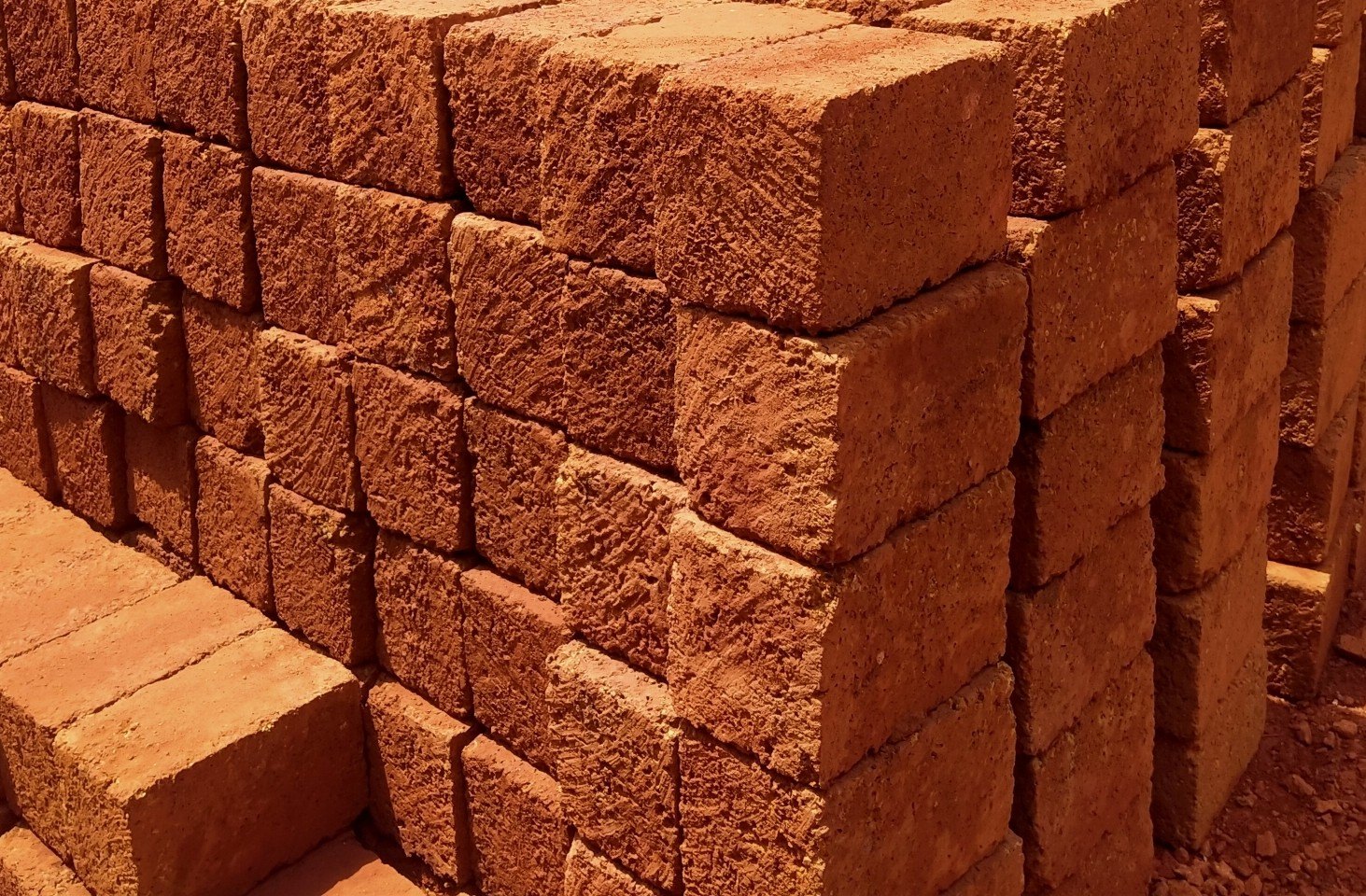
Laterite blocks are quarried and cut in a range of sizes depending on their intended use — load-bearing walls, cladding, partitions, or decorative finishes. Two commonly requested sizes are:
- 8 x 7.75 x 12 inches — a mid-range block often used for load-bearing masonry walls where a slightly narrower width is preferred for better mortar bonding.
- 8 x 8 x 14 inches — a larger block suited for thicker walls, boundary compounds, and structures requiring greater mass and stability.
Beyond these two, laterite suppliers across Kerala and Karnataka offer several other widely used sizes:
- 12 x 6 x 6 inches — a compact standard block popular for partition walls and lightweight construction.
- 12 x 7 x 7 inches — the most common "standard" laterite block used in general residential construction.
- 13 x 8 x 8 inches — a heavier block used for load-bearing exterior walls.
- 8 x 9 x 13 inches — described by several Kerala suppliers as the standard load-bearing block size.
- 7 x 12 inches and 8 x 12 inches (20 mm thickness) — cladding-specific sizes, cut thin for wall veneer and decorative facades rather than structural use.
- 14 x 7 inches — another size commonly stocked by suppliers in Kannur and northern Kerala.
It's worth noting that laterite is relatively soft when freshly quarried, which means blocks can usually be custom-cut to a required size on request, unlike harder stones such as granite.
Laterite Stone Size in Inches
Inches remain the default unit used by masons, suppliers, and contractors across Kerala when discussing laterite stone size. Blocks are typically described using three measurements in the order length x width x height (for load-bearing blocks) or length x height (for thinner cladding tiles). The most frequently quoted laterite stone size in inches includes 12x7x7, 12x6x6, 13x8x8, and the two sizes highlighted earlier — 8x7.75x12 and 8x8x14. When ordering, it helps to specify all three dimensions clearly, since even a small variation in width can affect the number of blocks needed per square foot of wall.
Laterite Stone Size in MM
For architects and engineers working with metric drawings, converting laterite stone size in mm is straightforward, since 1 inch equals 25.4 mm. Using this conversion:
- 12 x 7 x 7 inches ≈ 305 mm x 178 mm x 178 mm
- 12 x 6 x 6 inches ≈ 305 mm x 152 mm x 152 mm
- 13 x 8 x 8 inches ≈ 330 mm x 203 mm x 203 mm
- 8 x 7.75 x 12 inches ≈ 203 mm x 197 mm x 305 mm
- 8 x 8 x 14 inches ≈ 203 mm x 203 mm x 356 mm
- Cladding thickness of 20 mm is already specified in metric by most suppliers directly.
Metric conversions are especially useful when laterite is being specified alongside other materials like brick or concrete blocks in a mixed-material construction drawing.
Laterite Stone Size in Kerala
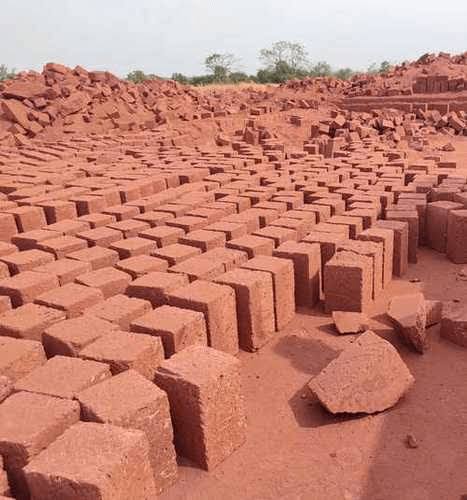
Kerala remains the largest producer and consumer of laterite stone in India, with major quarrying regions in Kannur, Kasaragod, Malappuram, and Ernakulam. Laterite stone size in Kerala generally follows regional supplier conventions rather than a single national standard. Northern Kerala districts such as Kannur and Kasaragod, known for strong, dense laterite deposits, commonly supply 12x7x7 inch and 13x8x8 inch blocks for load-bearing walls, alongside 14x7 inch pieces for lighter applications. Ernakulam-based suppliers often focus more on cladding tiles with thicknesses around 10 mm to 20 mm, used for exterior wall finishes on modern homes that want the traditional laterite look with a lighter structural load. Because of this regional variation, it's always advisable to confirm exact laterite stone size availability with a local supplier before finalising a construction estimate.
Laterite Stone Weight in KG
Laterite stone weight in kg depends on block size, density, and moisture content at the time of quarrying, but general benchmarks are well established in the industry. A standard 12 x 7 x 7 inch block typically weighs between 30 and 35 kg. Larger blocks such as 13x8x8 inches will weigh proportionally more, often in the 35–45 kg range, while smaller 12x6x6 inch blocks tend to weigh slightly less. Cladding tiles, being much thinner, weigh considerably less per piece — often under 10 kg depending on surface area. When planning transport or estimating structural load, factoring in laterite stone weight in kg per block, multiplied by the total number of blocks required, gives a reasonably accurate total load estimate for foundation and structural planning.
Why Laterite Stone Size Matters
Choosing the correct laterite stone size affects several practical aspects of a construction project — the number of blocks required per square foot, the thickness and insulation value of the finished wall, labour time for cutting and fitting, and overall material cost. Larger blocks like 8x8x14 inches reduce the number of mortar joints and can speed up construction, while smaller or cladding-sized blocks are better suited for decorative and non-structural applications. Builders in Kerala and elsewhere should always confirm both the dimensions and the laterite stone weight in kg with their supplier before large-scale procurement, since even standard sizes can vary slightly between quarries. Since cost is closely tied to block size, check our detailed laterite stone price guide to estimate the budget for your specific requirement.
Frequently Asked Questions
What is the standard laterite stone size?
The most common standard laterite stone size used in Kerala construction is 12 x 7 x 7 inches or 12 x 6 x 6 inches for load-bearing blocks, and 7 x 12 inches or 8 x 12 inches with 20 mm thickness for cladding tiles.
What is the weight of a laterite stone in kg?
A standard laterite stone block of about 12 x 7 x 7 inches typically weighs between 30 and 35 kg, though weight varies with density, moisture content, and quarry source.
What is laterite stone size in mm?
A 12 x 7 x 7 inch laterite block converts to approximately 305 mm x 178 mm x 178 mm in millimetres.
Can laterite stone be cut to a custom size?
Yes. Laterite is soft when freshly quarried and can be cut to almost any custom size on request, unlike harder stones such as granite. It hardens over time once exposed to air.
What size is used for laterite cladding?
Laterite cladding tiles are typically supplied in 7 x 12 inch or 8 x 12 inch sizes with a thickness of around 10 mm to 20 mm, since they are used as a decorative veneer rather than for load-bearing walls.
Which laterite stone size is best for load-bearing walls?
For load-bearing walls, thicker blocks such as 12 x 7 x 7 inches, 13 x 8 x 8 inches, or 8 x 9 x 13 inches are generally preferred, as their added width and weight provide better structural strength.
Conclusion
Laterite stone continues to be a preferred material for sustainable, natural construction across South India, largely because of its versatility in size and weight. Whether you need an 8x7.75x12 inch block for a load-bearing wall, an 8x8x14 inch block for a heavier structure, or a thin cladding tile for a decorative facade, understanding laterite stone size in inches, mm, and kg helps in accurate planning and budgeting. For the most reliable results, always source laterite stone size in Kerala directly from established regional quarries and confirm exact dimensions and weight before construction begins.
Learn more on our home page, or check current rates on our laterite stone price guide.
Need help choosing the right laterite stone size for your project?
Message us your wall dimensions and block preference for a quick, accurate estimate.