Long before cement trucks rumbled down village roads, before steel gates and painted plaster became the language of protection, there was a stone that simply rose from the earth to guard the homes above it. This is the story of the laterite stone wall — a story written in iron, rain, and centuries of quiet endurance.
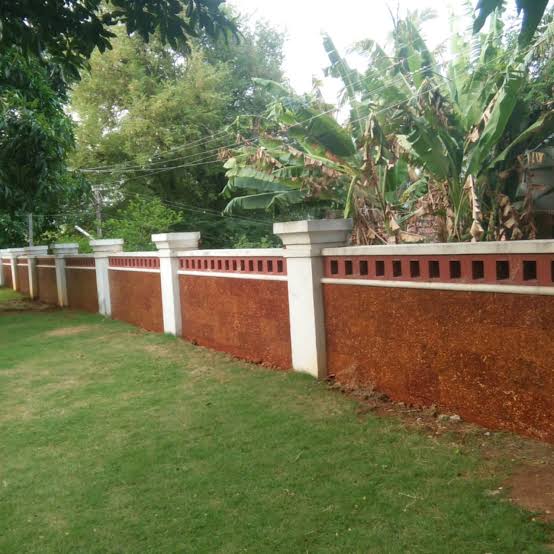
Born From Fire and Rain
Picture a landscape drenched by monsoon after monsoon, where iron and aluminum-rich rock lies just beneath red, sun-baked soil. Over thousands of years, heavy tropical rainfall washes away the soluble minerals, leaving behind a dense, porous rock full of iron oxide — laterite. It's why the stone wears that unmistakable rust-red or ochre hue, the color of earth that has weathered a thousand storms and hardened into something stronger for it.
Geologists have documented laterite deposits across India, West Africa, Southeast Asia, and parts of South America — regions that share one thing in common: intense tropical weathering. In India alone, the states of Kerala, Karnataka, and Goa sit atop some of the richest laterite belts in the world, and it shows in their architecture. Entire villages, temples, and forts stand today on foundations quarried from the very ground beneath them.
A Wall With a Thousand-Year Memory
Here's where the story gets interesting. Laterite isn't just old — it's proven. The Angkor Wat temple complex in Cambodia, built in the 12th century, used laterite blocks as structural cores for many of its towers and enclosures, later faced with sandstone for carving. Nearly 900 years later, those laterite cores still stand. That's not folklore — that's a material passing the toughest test any building product can face: time itself.
When a family chooses a laterite stone compound wall today, they're not choosing a trend. They're choosing a material with a track record measured in centuries, not decades.
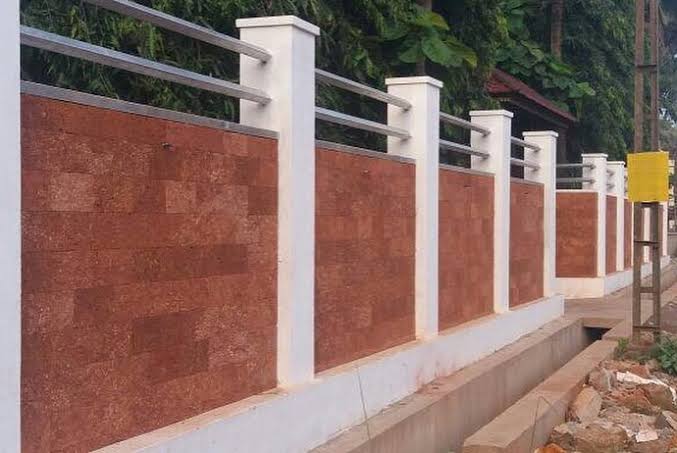
Why Builders Keep Coming Back to It
Every storyteller needs a reason their hero keeps winning, and laterite's strength lies in a few honest, measurable qualities:
- Breathability. Laterite is naturally porous, which means a boundary wall built from it allows moisture to escape rather than trap it inside. This reduces dampness-related damage compared to many solid, non-porous materials.
- Thermal comfort. The same porosity that lets moisture breathe also helps regulate heat. Walls built from laterite tend to stay cooler through blistering afternoons, a quality especially valued in tropical climates where compound walls face direct sun for most of the day.
- Compressive strength. Depending on the deposit and depth from which it's quarried, laterite blocks typically show compressive strength in the range of roughly 1.9 to 4.2 N/mm² for softer surface layers, with hardened, deeper laterite reaching considerably higher figures — strong enough for load-bearing boundary construction when used correctly.
- Low embodied energy. Unlike fired bricks or cement blocks that demand kilns and high-temperature processing, laterite is cut directly from quarries in block form. This drastically lowers the energy and carbon footprint tied to its production.
- Local abundance. In laterite-rich regions, transportation distances from quarry to construction site are often short, which keeps both cost and carbon emissions down.
The Wall as a Character, Not Just a Structure
In many South Indian villages, elders still describe old laterite compound walls the way you'd describe a stubborn old relative — weathered, a little uneven, but utterly dependable. Unlike a painted concrete wall that starts showing cracks and stains within a handful of monsoons, a laterite wall often ages differently: it darkens slightly, develops a natural patina, and blends further into the landscape it was quarried from. There's a quiet symbolism in that — a wall built from the land, returning visually to the land.
This is part of why laterite has seen a genuine revival in contemporary architecture, particularly among designers pursuing sustainable, regionally rooted aesthetics. Exposed laterite stone walls have become a signature feature in resorts, boutique homes, and heritage-style buildings across Kerala and coastal Karnataka, prized as much for their texture and warmth as for their strength.
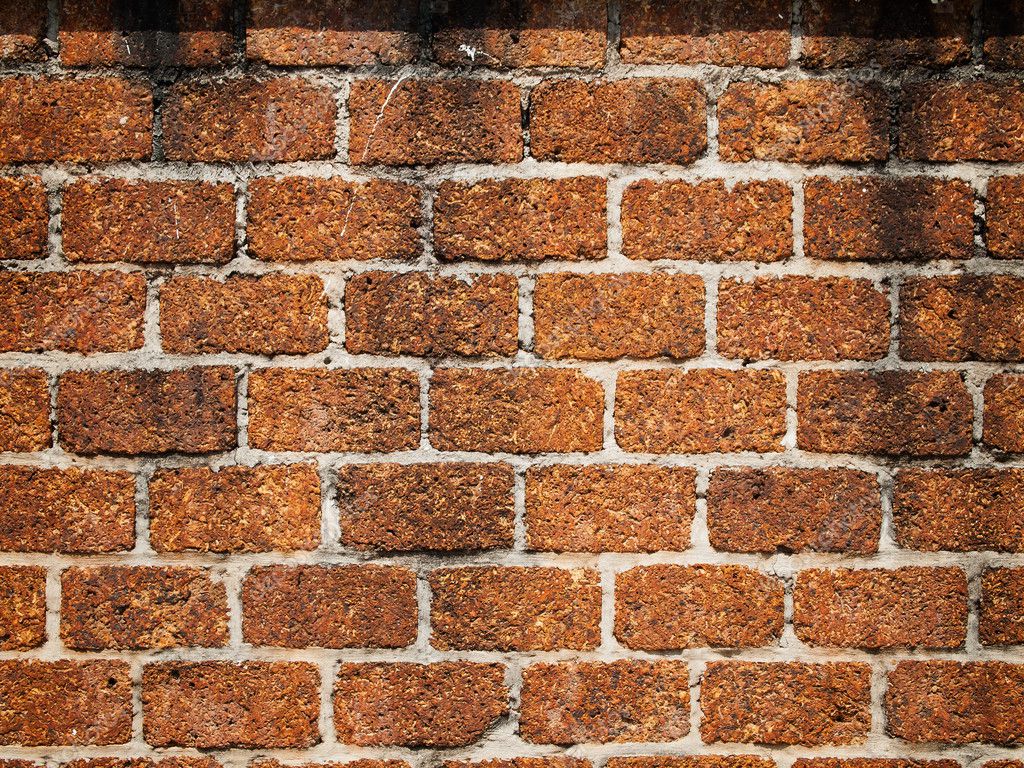
Building One Today
If you're considering a laterite stone compound or boundary wall for your own property, the process typically follows a few essential steps:
- Sourcing quality blocks — Laterite hardness varies significantly by quarry depth and region, so sourcing from a reliable, experienced supplier matters enormously.
- Curing and stabilization — Freshly quarried laterite is softer and easier to cut; it hardens further on exposure to air, a property masons have exploited for generations, cutting blocks fresh and letting them cure in place.
- Mortar and jointing — Traditional lime mortar is often preferred over cement for laterite masonry, as it allows the wall to continue "breathing" while still bonding the blocks securely.
- Weatherproofing the coping — Even a resilient stone benefits from a well-designed coping or capping layer at the top of the wall to shed rainwater efficiently and prevent water ingress into the joints below.
Done well, a laterite boundary wall isn't just a barrier — it becomes part of a property's identity, much the way an old stone fence becomes part of a countryside's character over generations.
The Ending Every Homeowner Wants
Every homeowner wants the same ending to their construction story: a wall that doesn't just look good on day one, but still stands proud decades later, weathering storms rather than being worn down by them. Laterite has been auditioning for that role for thousands of years, and it keeps getting cast in the lead.
If you're planning a compound or boundary wall project and want to explore genuine, quarry-sourced laterite stone, Red Earth Co. can help you choose the right block size and quantity for your site.
In the end, a laterite stone wall isn't just construction. It's geology turned into architecture, patience turned into protection, and earth turned into a story that keeps being told, one boundary wall at a time.
Frequently Asked Questions
What is a laterite stone wall made of?
A laterite stone wall is built from laterite, a naturally occurring, iron-rich rock formed through intense tropical weathering. It is quarried directly in block form and used for construction without needing to be fired like bricks.
Is laterite stone good for a compound or boundary wall?
Yes. Laterite is naturally porous and breathable, resists dampness buildup, offers good thermal comfort in hot climates, and has documented compressive strength suitable for load-bearing boundary and compound walls when properly sourced and cured.
How long does a laterite stone wall last?
Laterite has an exceptional track record of durability. Structures such as the laterite cores of Angkor Wat, built in the 12th century, remain standing today, demonstrating the material's ability to endure for centuries with proper construction and maintenance.
Where is laterite stone commonly found and used?
Laterite deposits are common in tropical regions including India (notably Kerala, Karnataka, and Goa), West Africa, Southeast Asia, and parts of South America. It has long been used in temples, forts, homes, and boundary walls in these regions.
What mortar is best for laterite stone masonry?
Traditional lime mortar is often preferred over cement mortar for laterite masonry, since it allows the wall to remain breathable while still providing a secure structural bond between blocks.
Is laterite stone an eco-friendly building material?
Yes. Laterite requires no high-temperature firing like bricks do, is often quarried close to where it is used, and results in a lower embodied energy and carbon footprint compared to many manufactured wall materials.
Planning a laterite stone compound or boundary wall?
Message us your site location and wall length for a clear, all-inclusive quote — no hidden costs added later.